If I were to describe my mentality around this project’s direction a couple of months ago in one word, it would probably be “aimless”. There I was, having just spent a few months trying to develop some decently intuitive level design tools, only to realise that I had no idea how I would actually use them to make fun and interesting levels.
Being a programmer first and a designer second, it is really easy to continually polish, optimise or refactor your game’s code as a way of putting off big scary gamedev tasks that you’re not used to, such as sound, art, level design, or… basically all other aspects of developing a game.
This was exactly the trap I had fallen into, but it took me a while to realise it. I knew I had to make some kind of change to my development process so that I could find the motivation to continue.
Therefore, how did I find a way to move forward with the development of Don’t Drop The Ball?
Drawn Out
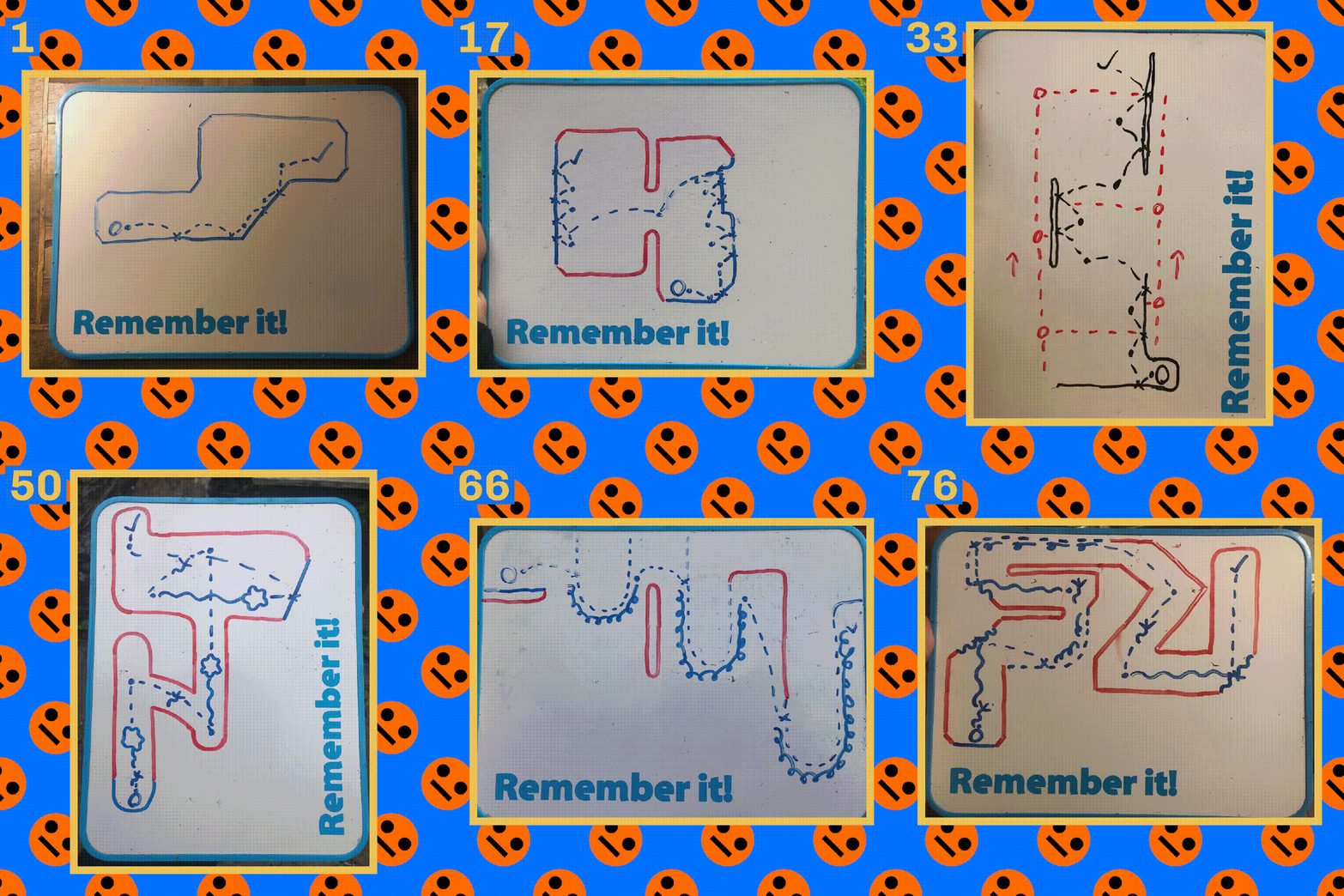
The answer (in my case) was to spend a week or so almost entirely away from the technologies that I had relied on to create my game so far, and to set a goal: I would design one-hundred levels on my handy portable whiteboard, which I could then bring into my game with the level design tools that I have already created.
So, did I achieve this?

The answer is… almost! I managed to design 76 levels, and you can see all of them in the above image. It’s kind of hard to make anything out at this size, but thankfully, the image is huge, so you can open it in a new tab to have a proper gander at it.
Gridlocked
To actually get 76 individual distinct levels designed over that week, I couldn’t just sit down and hope that I would have some spark of inspiration each day. I had to approach this challenge with some kind of plan.
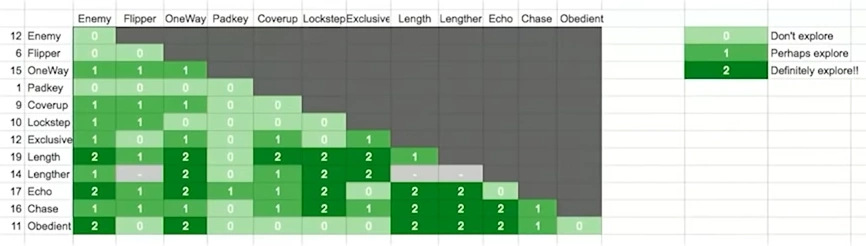
Someone who has struggled with this exact problem (and who I am amazed hasn’t been brought up in these blogs yet) is Game Maker’s Toolkit on YouTube. In his project (which is a puzzle game about magnets), he utilised a method by fellow developer Patrick Traynor in which he would “enumerate all mechanic pairs“.
In simpler terms, he would envision all possible pairs of game mechanics that were present in his game (which can be visualised with a handy grid), and then try and figure out some interesting way of interacting with them both. Even though I’m not developing a puzzle game, this same approach to overcoming the digital blank page proved incredibly useful for my game.
One big advantage of leaving my usual development tools behind is that I could utilise mechanics that had not yet been implemented in the game to come up with some of these designs! So, I could use my imagination to play around with deadly moving lasers, sticky slime surfaces, and goopy grappling hooks, to name a few.
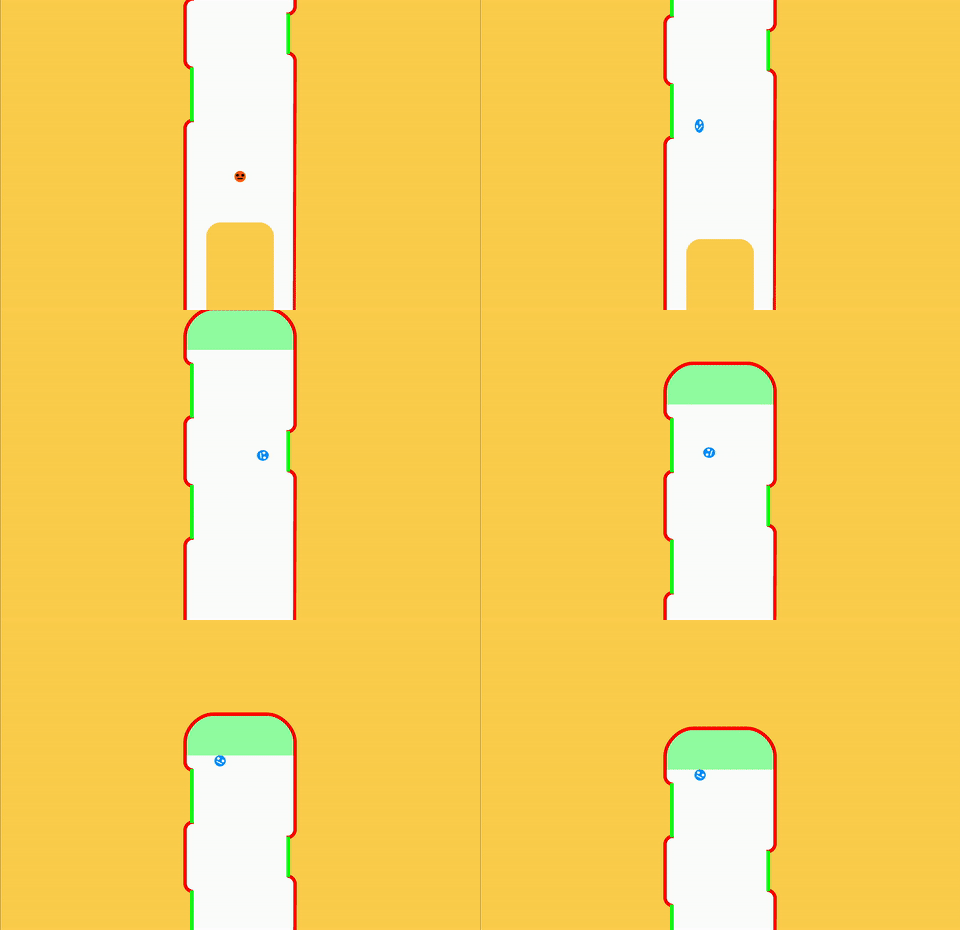
This blog has been DDTB gameplay-light so far, so here are the aforementioned slime surfaces in action. The player can squidge onto them to easily traverse floating platforms and climb walls! But as you’ll see in the following blog posts, that’s not all they can be used for…

Conclusion
I was initially kind of disappointed that I had only made it three-quarters of the way to my goal, but then I remembered that before this, I had maybe 7 or 8 hastily designed test levels which were way too hard for most new players to actually get through (or the ones that have tried my game so far, at least).
Now, I have levels that build gradually in difficulty, incorporating all of the existing mechanics that I have implemented, as well as some new, unimplemented ones. Most importantly though, having these designs to refer to has given me a new boost of motivation to continue with the development of Don’t Drop The Ball, as I now know exactly what I need to implement to have this set of levels ready to play.
By the end of this year, I would very much like to have a demo out that features all 76 of these levels, which I can then shove in front of anyone who’s willing to give it a go, and inevitably see them struggle with the first draft (which is still productive!).
I was initially hesitant to hand the game over in such an early form, but having been inspired by Valve Software’s user testing approach (start testing a game’s mechanics within the first week of development), I’m probably way overdue on gathering feedback for everything I’ve created so far.
Finally, I recognise that it has been a while since the last post on here, so I will also be putting out one post a month for the rest of the year about the new power-ups, terrain types and levels that I will create!
Thanks as always for reading ❤️
 Don't Drop The Ball